Standing Water Removal Annapolis MD, Done Before Damage Spreads
Fast pumping, extraction, and drying for homes and businesses across Anne Arundel County
Standing water removal Annapolis MD homeowners and property managers call first means pumping the water out, extracting what's left, and drying the structure before mold and rot take hold. Whether a burst pipe flooded your basement in Eastport or a storm pushed water into your crawl space near Parole, our team arrives with pumps, extraction wands, and commercial dehumidifiers ready to work. We handle stagnant water cleanup in Annapolis, Maryland for houses, rentals, and commercial buildings, and we start the same day you call.
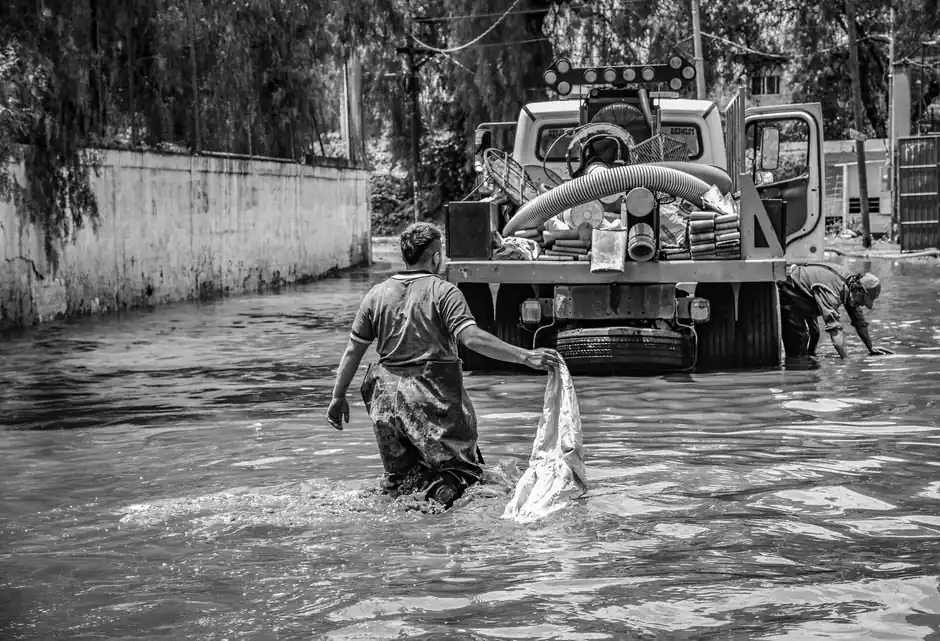
What Standing Water Removal Annapolis MD Actually Involves
Standing water removal Annapolis MD is the process of pumping, vacuuming, and drying water that has pooled on a floor, in a basement, or inside a crawl space until the structure is dry again. It is not just a wet-vac job. Water sits in carpet padding, subfloor, drywall, and insulation long after the surface looks dry. We use moisture meters and thermal imaging cameras to map where the water actually went, then pull it out with truck-mounted extraction and water pumps before setting air movers and dehumidifiers to finish the job.
Annapolis properties get standing water from a short list of usual suspects: burst pipe, slab leak, water heater failure, sewage backup, roof leak, and storm flooding off the Severn and South River. Older homes in the Historic District have plaster walls and stone foundations that hold moisture differently than newer construction, and low-lying blocks near Oyster Harbor and Arundel on the Bay flood faster after heavy rain. If you need to remove standing water Annapolis MD residents can trust, the clock matters. Mold growth can start in 24 to 48 hours.
Why Fast Standing Water Removal Matters
Water damage gets worse by the hour. Here is what you get when you call us early instead of waiting to see if it dries on its own.
Stops Mold Before It Starts
Mold growth can begin within 24 to 48 hours of a flood. We extract standing water and drop the indoor humidity below 60 percent with desiccant dehumidifiers, which shuts down the conditions mold needs. Catching it in the first day is the difference between drying a room and gutting one.
Protects Floors and Subfloor
Hardwood flooring, carpet padding, and plywood subfloor soak up water fast. Our extraction wand pulls water out of carpet and pad before it wicks into the subfloor, and we dry hardwood in place when we get there in time. Waiting a week usually means replacing the floor instead.
Cuts Structural Damage
Water weakens baseboard, drywall, and framing and can warp a concrete slab's finish. We use thermal imaging cameras to find hidden moisture behind walls and under floors, then dry those cavities with air movers. Finding it early keeps repair costs in the hundreds instead of the thousands.
Restores Indoor Air Quality
Standing water releases odors and can carry sewage contaminants from a backup. We remove the water, treat affected surfaces, and run HEPA filtration so your basement or crawl space smells like a room again, not a swamp. Poor indoor air quality from a wet crawl space is one of the most common complaints we hear.
Our Standing Water Removal Process, Step by Step
Every job follows the same sequence, from the first phone call to the final moisture reading. Here is what you can expect when our crew pulls up.
Emergency Call
You call (410) 559-1961 and describe what flooded and where. We ask about the water source, whether it is clean or sewage, and how deep it is. That tells us what equipment to load. For emergency standing water removal Annapolis open now calls, we prioritize active flooding and water still rising.
Inspection and Mapping
We walk the space with a moisture meter, hygrometer, and thermal imaging camera to find the water's edge and any hidden moisture behind walls or under flooring. This takes 20 to 40 minutes on a typical basement. You get a clear picture of what is wet and what is not before we start pulling water.
Pumping and Extraction
Deep water comes out first with a water pump, then we finish with truck-mounted extraction and an extraction wand across carpet, pad, and hard floors. A typical flooded basement takes two to four hours to pump and extract. We bag and remove ruined carpet padding and any soaked debris.
Drying and Dehumidification
We set air movers and dehumidifiers, sometimes a desiccant dehumidifier for crawl spaces, and run them for two to five days depending on materials. Drywall, hardwood, and concrete slab each dry at different rates. We check readings daily and adjust equipment until the structure hits dry standard.
Final Verification
Before we pack up, we take final moisture readings and compare them to a dry reference from an unaffected part of your home. When the numbers match, the job is done. We leave you with a summary of what was wet, what we did, and how to keep it dry going forward.
Local Experience With Annapolis Water Damage
Our technicians hold IICRC WRT and IICRC ASD certifications and work to the ANSI/IICRC S500 Standard for professional water damage restoration. We are licensed through the Maryland Home Improvement Commission and carry EPA Lead-Safe Certification, which matters in the older homes around the Historic District where lead paint is common. We also hold OSHA 10 safety training. That combination means we know how to dry a 1920s plaster-and-stone house and a newer townhome on a concrete slab, and we document every job with moisture readings so you can see the drying progress, not just take our word for it.
- IICRC WRT and ASD certified technicians on every standing water job
- Licensed through the Maryland Home Improvement Commission for work in Anne Arundel County
- EPA Lead-Safe Certification for pre-1978 homes in the Historic District and Murray Hill
- Truck-mounted extraction and commercial dehumidifiers, not rented shop vacs
- Daily moisture documentation so you can track drying progress yourself
Why Annapolis Calls Us for Standing Water Removal
Plenty of companies will rent a pump and call it water removal. We do the full job: find the source, remove the water, dry the structure, and verify it is dry before we leave.
Same-Day Response
Water does not wait, and neither do we. Call before noon and we aim to have a crew at your door the same day, with pumps and extraction equipment already loaded. For active flooding, we treat it as priority one and get there as fast as traffic on Forest Drive allows.
Certified and Licensed
Our crew holds IICRC WRT and ASD certifications and works under our Maryland Home Improvement Commission license. We follow the ANSI/IICRC S500 Standard on every job, which means documented moisture readings, proper drying calculations, and a real dry standard instead of a guess.
Full-Service Stagnant Water Cleanup Annapolis
We do not stop at pumping water. Our stagnant water cleanup Annapolis service includes extraction, structural drying, dehumidification, and treatment for sewage-contaminated water. If your carpet padding or baseboard is ruined, we remove it and dry what is underneath so the repair does not come back to haunt you.
Upfront Pricing, No Surprises
You get a clear price before we start, based on the size of the affected area and the materials involved. If you searched for a standing water removal company Annapolis MD near me and want a straight answer on cost, we give you one on the phone and confirm it on site.
What Our Standing Water Removal Service Includes
Every job is different, but most standing water calls include the same core work. Here is what is covered in a standard visit, and what we handle as an add-on when the damage goes further.
What's Included
Water Source Inspection
We trace the water back to its source, whether that is a burst pipe, slab leak, appliance leak, roof leak, or storm intrusion. Finding the source first prevents us from drying a floor while water keeps coming in behind us.
Pumping and Extraction
Deep standing water comes out with a water pump, then we run a truck-mounted extraction wand across carpet, pad, hardwood flooring, and concrete slab. We remove saturated carpet padding and bag it for disposal.
Structural Drying Setup
Air movers and dehumidifiers go in place to dry drywall, subfloor, baseboard, and framing. Crawl spaces often get a desiccant dehumidifier because the air volume and humidity there need a different approach than a finished basement.
Moisture Monitoring
We take daily readings with a moisture meter and hygrometer and adjust equipment placement as materials dry. Hardwood flooring and thick plaster dry slower than drywall, so the schedule changes from room to room.
Contamination Treatment
If the water came from a sewage backup or a toilet overflow, we treat affected surfaces with an antimicrobial and remove porous materials that cannot be saved. Clean-water floods skip this step, which keeps the cost lower.
Problems We Solve With Standing Water Removal
Standing water creates a chain reaction: wet materials, rising humidity, mold, and structural weakness. We break that chain early, before the damage compounds.
Basement floods after heavy rain near Oyster Harbor
Water wicks into drywall and baseboard within hours, and humidity in the closed space feeds mold growth on joists and stored belongings.
We pump the standing water out, extract the rest, and run dehumidifiers to pull moisture out of the air and framing. For basements that flood repeatedly, we also point out where a vapor barrier or sump adjustment would help. Most finished basements dry in three to five days.
Burst pipe soaks carpet and subfloor
Carpet padding holds water like a sponge, and the plywood subfloor underneath starts to swell and delaminate within a day or two.
We shut off the water if it is still running, extract the carpet and pad, and dry the subfloor with air movers. If the pad is saturated, we remove and replace it. Drying the subfloor before it warps saves you a full floor replacement.
Crawl space holds water after a storm
Standing water in a crawl space raises the humidity of the whole house, which leads to poor indoor air quality, musty odors, and eventually rot in floor joists.
We pump the water out, remove any soaked insulation, and dry the space with a desiccant dehumidifier and air movers. We also check the vapor barrier and PVC piping for damage. Crawl spaces typically need three to five days of drying because the airflow is limited.
Sewage backup leaves contaminated water
Category 3 water carries bacteria and pathogens. Anything porous it touches, from carpet to drywall, becomes a health risk and usually cannot be saved.
We treat this as a contaminated water job: extract the water, remove and dispose of affected porous materials, treat hard surfaces with antimicrobial, and dry the structure. We follow the ANSI/IICRC S500 Standard for contaminated water and document everything for your insurance claim.
When to Call for Standing Water Removal
A water heater in a West Annapolis basement lets go overnight and leaves two inches of water across the floor.
We shut off the supply, pump the standing water, extract what is left, and dry the concrete slab and any stored items. If the water reached drywall, we cut a flood line and dry the wall cavity with air movers.
The basement is dry in three to four days, and you avoid replacing the bottom two feet of drywall.
A summer storm pushes water through a crawl space access in Arundel on the Bay.
We pump the crawl space, remove soaked insulation, and set a desiccant dehumidifier with air movers. We check the vapor barrier and look for any PVC piping that shifted.
Humidity in the crawl space drops back to normal, and the musty smell in the house above clears out.
A washing machine supply line fails in an Eastport townhome and floods the laundry room and hallway.
We extract water from the vinyl and carpet, pull up saturated pad, and dry the subfloor. We also check the wall cavity behind the washer with a thermal imaging camera.
The floor dries without warping, and you only replace the carpet pad instead of the whole floor.
A slab leak under a Downtown Annapolis condo leaves warm water seeping up through the concrete slab.
We locate the leak with thermal imaging, coordinate the plumbing repair, then dry the slab and any flooring above it. Concrete slab drying takes longer, so we monitor it daily.
The slab reaches dry standard in five to seven days, and the flooring above it stays intact.
Tools and Methods We Use
Tools & Equipment
Moisture Meter and Hygrometer
We use these to measure moisture content in drywall, wood, and concrete and to track relative humidity in the air. They tell us exactly when a material is dry, not just when it looks dry.
Thermal Imaging Camera
Infrared imaging shows temperature differences that reveal hidden moisture behind walls, under floors, and around baseboard. It is how we find water you cannot see.
Truck-Mounted Extraction and Extraction Wand
Our truck-mounted unit pulls water out of carpet and pad far faster than a portable wet-vac. The extraction wand gets into edges and corners where water pools.
Water Pump
For standing water deeper than an inch, we use a water pump to move volume quickly before extraction. Basements and crawl spaces usually need this first.
Air Movers and Dehumidifiers
Air movers keep air moving across wet surfaces to speed evaporation. Dehumidifiers, including desiccant dehumidifier units for crawl spaces, pull that moisture out of the air so it does not settle back into materials.
Bore Scope
A bore scope lets us look inside wall cavities without tearing them open. We use it to confirm whether insulation and framing behind drywall are wet.
Methods & Techniques
ANSI/IICRC S500 Standard
This is the industry standard for water damage restoration, and we follow it on every job. It sets the rules for moisture measurement, drying calculations, and when a material is officially dry. Following it means our drying is verifiable, not just visual.
Thermal Imaging Moisture Mapping
We scan walls, floors, and ceilings with an infrared camera to build a moisture map of the affected area. That map drives where we place air movers and dehumidifiers, so we dry the whole problem instead of just the visible puddle.
Daily Moisture Documentation
Every day we log readings from a moisture meter and hygrometer and compare them to a dry reference point in an unaffected part of the home. You get a record of the drying progress, which also helps if you file an insurance claim.
Contaminated Water Protocol
When water comes from a sewage backup or toilet overflow, we switch to a contaminated water protocol: remove porous materials, treat hard surfaces with antimicrobial, and dry with HEPA filtration running. This protects your health and your home.
How Standing Water Removal Works in Annapolis
Annapolis sits between the Severn River and the Chesapeake Bay, and that geography drives most of the standing water calls we run. Fall nor'easters and tropical remnants push water into low-lying blocks near Oyster Harbor, Arundel on the Bay, and Cape St. Claire, while the older housing stock in the Historic District and Murray Hill brings its own challenges. Plaster walls, stone foundations, and unfinished basements hold moisture longer than modern construction, and many of those homes have original cast iron and galvanized plumbing that fails at the joints. We adjust drying plans for that: plaster needs more time than drywall, and stone foundations need a different dehumidification setup than a poured concrete wall. If you need to remove standing water from basement near West Annapolis or anywhere in Anne Arundel County, we know which neighborhoods flood first and which materials dry slowest. The ZIP codes we serve most are 21401, 21403, and 21404, with 21411 covering the Historic District and Naval Academy area. Winter brings frozen pipes and burst pipe calls, spring and summer bring storm water and appliance leaks, and fall brings the nor'easters. Different season, same job: get the water out and dry the structure before mold growth starts.
Service Areas
Plaster walls and stone foundations hold moisture longer than modern drywall, so drying schedules here run a day or two longer. Many homes also need EPA Lead-Safe practices during any material removal.
Older townhomes with tight crawl spaces and original plumbing. Washing machine and water heater failures are common, and water spreads fast through shared walls.
Low-lying waterfront blocks that flood during fall nor'easters and summer storms. Basement and crawl space pumping is the most common call here.
Newer construction on concrete slabs. Slab leaks and appliance failures are the usual sources, and slab drying takes longer than wood subfloor drying.
A mix of older homes and renovations. We often find hidden moisture behind walls after a roof leak or plumbing failure that went unnoticed for a few days.
Local Considerations
Tidal flooding and storm surge near the Severn and South River
Water enters crawl spaces and basements through foundations and low openings. We pump first, then dry, and check the vapor barrier for damage before we leave.
Older plumbing in pre-1950 homes
Galvanized and cast iron lines fail at joints and under slabs. We locate the leak with thermal imaging before drying so the water source is actually stopped.
High summer humidity
Annapolis summers slow evaporation, so drying equipment runs longer. We rely on dehumidifiers to pull moisture out of the air, not just air movers.
Winter freeze events
Frozen pipes burst when they thaw, often flooding a wall cavity before anyone notices. We check wall cavities with a bore scope and thermal camera on every winter call.
Finished Basement Flood in Eastport
A water heater failed overnight and left two inches of standing water across 600 square feet of finished basement. Carpet, pad, and the bottom of the drywall were saturated, and the humidity reading was 78 percent.
We pumped and extracted the water in three hours, removed the ruined carpet pad, cut a 12-inch flood line in the drywall, and dried the space in four days. Final moisture readings matched the dry reference in an unaffected room.
Maintenance & Follow-up
We recommended a drip pan with a leak alarm under the new water heater and an annual flush to extend its life. Both are cheap insurance against a repeat.
A fall nor'easter pushed water into a 900-square-foot crawl space, soaking the insulation and leaving four inches of standing water. The house above smelled musty within two days.
We pumped the water out, removed the soaked insulation, and ran a desiccant dehumidifier with air movers for five days. The crawl space humidity dropped from 85 percent to 52 percent, and the smell cleared.
Maintenance & Follow-up
We replaced the damaged section of vapor barrier and suggested a sump pump check each September before storm season. Keeping the crawl space dry keeps the house above it dry too.
A main line backup sent contaminated water across a 200-square-foot laundry room and hallway. Vinyl flooring stayed, but carpet, pad, and the bottom of two walls were soaked with Category 3 water.
We extracted the water, removed and disposed of the carpet, pad, and affected drywall, treated hard surfaces with antimicrobial, and dried the structure in four days. Final readings confirmed dry standard.
Maintenance & Follow-up
We suggested a backwater valve on the main line and a yearly drain cleaning. Both reduce the chance of the same backup happening again.
What Standing Water Removal Costs
Typical 2026 pricing for standing water removal in Annapolis runs from $350 for a small, clean-water job to $3,500 or more for a large contaminated flood. Most residential calls land between $800 and $2,200. The biggest factors are how much water there is, what materials got wet, and whether the water is clean or contaminated. We give you a price on the phone and confirm it on site before we start, so you are not guessing. If you are comparing stagnant water cleanup Annapolis quotes, ask each company whether drying equipment and daily monitoring are included. With us, they are.
Pricing Factors
Water Volume and Area
A single room with an inch of water is a different job than a whole basement under four inches. More water means more pumping time, more extraction passes, and more equipment.
Water Category
Clean water from a supply line is the simplest job. Category 3 water from a sewage backup adds removal and disposal of porous materials, antimicrobial treatment, and HEPA filtration, which raises the cost.
Materials Affected
Carpet and pad are quick to extract but often need replacement. Hardwood flooring, plaster walls, and concrete slab take longer to dry and need more equipment, which adds days and cost.
Drying Time Required
Most jobs dry in three to five days. Crawl spaces, plaster walls, and slab construction can take five to seven. Each extra day of equipment rental and monitoring adds to the total.
Access and Obstruction
A finished basement with furniture and stored boxes takes longer to clear and dry than an empty one. Crawl spaces with tight access slow the work down too.
Mold Already Present
If mold growth has started, we add containment, HEPA filtration, and antimicrobial treatment. Catching the water in the first 24 to 48 hours usually avoids this cost entirely.
Typical Investment Range
$350 - $3,500+ depending on water volume, category, and materials affected
Actual pricing varies based on project scope and requirements
Value You Receive
Drying a wet basement costs a fraction of replacing a floor, framing, and drywall after mold sets in. Our pricing includes equipment, daily monitoring, and documentation you can hand to your insurance adjuster.
Frequently Asked Questions
Have questions? We have answers. If you don't see your question here, feel free to contact us.
Call UsHow much does standing water removal cost in Annapolis MD?
Most residential jobs run $800 to $2,200, with small clean-water calls starting around $350 and large contaminated floods reaching $3,500 or more. The price depends on water volume, whether the water is clean or sewage, and what materials got wet. We quote on the phone and confirm on site before starting. Drying equipment and daily monitoring are included in our price, not billed as extras.
Is standing water dangerous in Annapolis Maryland?
Yes, and the danger grows by the hour. Clean water can support mold growth within 24 to 48 hours, and mold spreads through drywall, insulation, and carpet padding. Sewage-contaminated water carries bacteria and pathogens that make porous materials unsafe to keep. Standing water also weakens subfloor, baseboard, and framing. The faster it comes out and the structure dries, the lower the risk to your health and your home.
How long can standing water sit before causing damage in Annapolis?
Mold growth can start in 24 to 48 hours, and hardwood flooring and plywood subfloor begin to swell and delaminate within a day or two. Carpet padding saturates almost immediately. In Annapolis, summer humidity speeds up the process, and crawl spaces with limited airflow are the worst case. If water has been sitting more than 48 hours, expect some material removal and a longer drying schedule.
Who removes standing water in Annapolis?
Annapolis Water Damage Pros removes standing water for homes and businesses across Anne Arundel County, including the Historic District, Eastport, West Annapolis, Parole, and Oyster Harbor. Our technicians are IICRC WRT and ASD certified and work under our Maryland Home Improvement Commission license. We serve ZIP codes 21401, 21403, 21404, and 21411. Call (410) 559-1961 and we will get a crew moving.
Licensed, Certified, and Local
Certifications
Customer Reviews
Our water heater let go at 11 p.m. and flooded the basement. They answered the phone, had a crew out by morning, and pumped two inches of water out before lunch. Four days later the basement was dry and the moisture readings matched the dry room. Straight answers on price, no surprises.
A nor'easter pushed water into our crawl space in Arundel on the Bay. They pumped it out, pulled the soaked insulation, and ran a dehumidifier for five days. The musty smell in the house is gone. They explained every step and showed us the daily readings.
Sewage backup in our Murray Hill laundry room. They handled the contaminated water properly, removed the carpet and pad, treated everything, and dried it out. They also documented it all for our insurance claim. Professional from start to finish.
Related Services
Explore our other professional services
Emergency Water Damage Restoration
When water is still coming in, emergency restoration stops the source and starts extraction immediately. We pair it with standing water removal so the flood does not spread while we work.
Emergency Water Damage RestorationResidential Water Damage Restoration
Houses in Annapolis have different drying needs than commercial buildings. This service covers the full residential scope, from extraction through structural drying and repairs.
Residential Water Damage RestorationCommercial Water Damage Restoration
Offices, restaurants, and retail spaces on Forest Drive and in Downtown Annapolis need fast turnaround. We scale equipment to the square footage and work around your operating hours.
Commercial Water Damage RestorationEmergency Water Extraction
Extraction is the first physical step of standing water removal. Truck-mounted units pull water out of carpet, pad, and hard floors faster than portable equipment.
Emergency Water ExtractionFlood Water Removal
Storm and tidal flooding bring in dirty water that needs a different approach than a clean supply line break. We pump, extract, and treat affected surfaces.
Flood Water RemovalBurst Pipe Water Damage Cleanup
A burst pipe can dump hundreds of gallons into a wall cavity before you notice. We locate the break, stop the water, and dry the wall and floor it soaked.
Burst Pipe Water Damage CleanupPlumbing Leak Water Damage Cleanup
Slow leaks behind walls and under sinks cause hidden moisture that a moisture meter finds. We dry the cavity and the materials around it before mold starts.
Plumbing Leak Water Damage CleanupCeiling Water Damage Drying
Water from a roof leak or upstairs overflow pools in ceiling drywall and can sag or collapse. We dry or remove the affected section and dry the framing above it.
Ceiling Water Damage DryingWall Water Damage Drying
Wet drywall and plaster lose strength fast. We map the moisture with thermal imaging, cut a flood line when needed, and dry the wall cavity with air movers.
Wall Water Damage DryingHardwood Floor Water Damage Drying
Hardwood can cup and warp within days. We extract the surface water and dry the boards in place when we get there in time, which saves the floor.
Hardwood Floor Water Damage DryingCarpet Water Extraction
Carpet holds water in the fibers and the pad underneath. Our extraction wand pulls water from both, and we remove pad that is too saturated to dry.
Carpet Water ExtractionWet Carpet Drying
After extraction, carpet needs airflow and dehumidification to dry fully. We set air movers and monitor moisture until the carpet and subfloor are dry.
Wet Carpet DryingSubfloor Water Damage Drying
Plywood and OSB subfloor delaminate when they stay wet. We dry the subfloor before it swells, which prevents a full floor replacement later.
Subfloor Water Damage DryingStorm Water Damage Cleanup
Nor'easters and summer storms push water into basements and crawl spaces across Annapolis. We pump, extract, and dry before mold gets a foothold.
Storm Water Damage CleanupRoof Leak Water Extraction
Roof leaks travel down through ceilings and walls before they show. We trace the path with thermal imaging and dry every wet layer along the way.
Roof Leak Water ExtractionAppliance Leak Water Cleanup
Refrigerators, dishwashers, and washing machines all leak. We extract the water, dry the floor and cabinets, and check the wall cavity behind the unit.
Appliance Leak Water CleanupWashing Machine Leak Water Removal
A failed supply line can flood a laundry room in minutes. We shut off the water, extract, and dry the floor and the wall behind the machine.
Washing Machine Leak Water RemovalDishwasher Leak Water Removal
Dishwasher leaks usually pool under the kitchen floor and soak the cabinet base. We extract the water and dry the cabinet and subfloor.
Dishwasher Leak Water RemovalRefrigerator Water Leak Cleanup
Ice maker and water line leaks drip behind the fridge for weeks before showing. We find the moisture with a meter and dry the wall and floor behind it.
Refrigerator Water Leak CleanupWater Heater Leak Water Removal
Water heaters fail at the tank or the fittings and dump 40 to 80 gallons fast. We pump, extract, and dry the area, then check the drywall for wicking.
Water Heater Leak Water RemovalToilet Overflow Water Cleanup
An overflow can be clean water or sewage, depending on the cause. We identify the category, extract, treat if needed, and dry the bathroom and hallway.
Toilet Overflow Water CleanupBathroom Water Damage Drying
Bathroom leaks soak tile underlayment, subfloor, and the wall behind the shower. We dry the hidden layers, not just the visible surface.
Bathroom Water Damage DryingKitchen Water Damage Cleanup
Kitchen leaks hit cabinets, countertops, and subfloor. We extract the water, dry the cabinet base, and check the wall behind the sink and fridge.
Kitchen Water Damage CleanupBasement Water Removal
Basements are the most common standing water call in Annapolis. We pump deep water, extract the rest, and dry the slab, walls, and stored contents.
Basement Water RemovalCrawl Space Water Removal
Crawl spaces dry slowly because airflow is limited. We pump, remove soaked insulation, and run a desiccant dehumidifier until the space is dry.
Crawl Space Water RemovalSlab Leak Water Damage Cleanup
A slab leak seeps up through concrete and soaks the flooring above. We locate it with thermal imaging, coordinate the repair, and dry the slab.
Slab Leak Water Damage CleanupStructural Drying Services
Structural drying is the drying phase of standing water removal. We dry framing, subfloor, drywall, and plaster to a verified dry standard.
Structural Drying ServicesDehumidification Services
Dehumidifiers pull moisture out of the air so it does not settle back into materials. We size and place them based on the room volume and humidity reading.
Dehumidification ServicesMoisture Detection for Water Damage
Moisture meters, hygrometers, and thermal imaging cameras find water you cannot see. Detection is how we know a job is actually finished.
Moisture Detection for Water DamageWhat Annapolis Customers Say
Real experiences from customers who chose our Standing Water Removal services
"Our washing machine supply line broke and flooded the laundry room and hallway. They pulled up the soaked carpet pad, dried the subfloor, and checked the wall behind the washer with a camera. The floor did not warp and we only replaced the pad. They were at the house within a few hours of my call."
Karen M.
Homeowner, Eastport
"A pipe burst in the wall during a cold snap and water ran into the basement for hours before we noticed. They found the wet section with a thermal camera, cut a flood line, and dried the wall cavity. Four days later everything read dry. Honest pricing and they explained what they were doing the whole way."
Dave R.
Homeowner, West Annapolis
"We manage several rentals near the Historic District, and older plumbing fails more than you would think. They have handled three standing water calls for us now. They pump fast, dry the plaster properly, and send documentation we can pass to the owners. Reliable and easy to work with."
Priya S.
Property Manager, Downtown Annapolis
Need Standing Water Removal Annapolis MD Today?
Water sitting on your floor gets worse every hour. Our IICRC-certified crew is ready to pump, extract, and dry your home or business across Anne Arundel County. Call (410) 559-1961 and we will get a crew moving your way.