Moisture Detection for Water Damage Annapolis MD You Can Trust
Thermal imaging and meter testing that finds hidden leaks before mold does.
Moisture detection for water damage Annapolis MD locates the water you cannot see: inside wall cavities, under hardwood, and beneath the subfloor. If a pipe burst, a supply line dripped, or your basement smells musty after a storm, our water damage inspection in Annapolis pinpoints the source with thermal imaging and calibrated meters before mold growth takes hold. We serve homeowners and property managers across Anne Arundel County.
What Moisture Detection for Water Damage Annapolis MD Really Involves
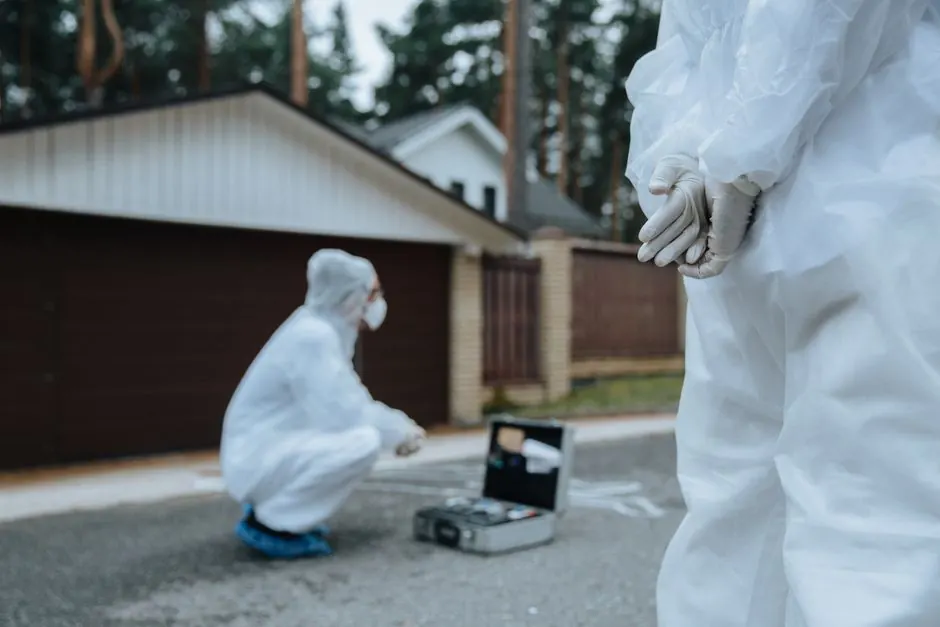
Moisture detection for water damage Annapolis MD is a diagnostic service that finds trapped water and elevated humidity inside building materials before visible damage appears. We scan walls, ceilings, floors, and crawl spaces with a moisture meter, thermal imaging camera, and hygrometer, then map every wet zone on a floor plan. A pin-type meter reads moisture content in drywall and plywood; an infrared thermometer and thermal camera reveal temperature differences where evaporating water cools the surface. We also check baseboards, subfloor, and carpet padding, because water wicks sideways far beyond the stain you can see.
Annapolis homes face a specific set of water problems. Nor'easters and summer thunderstorms push water through roof leaks and failed window flashing, while older plumbing in the Historic District and Eastport produces slab leaks and burst pipes that soak concrete slab and hardwood flooring for weeks before anyone notices. If you have been searching for moisture detection for water damage Annapolis MD near me, it is usually because of a musty smell, a rising water bill, or a soft spot in the floor. We confirm the source, measure how far the moisture has spread, and tell you exactly what needs drying.
Why Early Moisture Detection Saves Money
Water hides. By the time a stain shows on your ceiling, the cavity behind it has often been wet for days. Finding moisture early turns a structural repair into a drying job.
Stop Mold Before It Starts
Mold growth can begin within 24 to 48 hours of a leak. Our water leak detection Annapolis service measures moisture content in drywall, insulation, and carpet padding so we can dry the cavity before spores colonize it. Catching it early usually means drying only, not demolition and rebuild.
Protect Floors and Subfloor
Hardwood flooring and plywood subfloor cup, crown, and delaminate when moisture sits too long. A moisture meter reading above 16 percent on a wood floor is a red flag. We map the wet zone, set drying equipment, and monitor daily until the reading returns to the dry standard for your home.
Lower Your Insurance Claim
Most policies cover sudden water damage but not the mold that follows long-term neglect. Documented moisture readings and thermal images give your adjuster a clear picture of the loss. We build the drying report in Xactimate so the claim moves faster and you are not paying out of pocket for preventable damage.
Find the Source, Not Just the Stain
A ceiling stain can come from a roof leak, a failed supply line, or an overflowing tub three rooms away. Our technicians trace the path with a bore scope and infrared thermometer, confirm the actual source, and test again after repairs so you know the leak is truly stopped.
Our Moisture Detection Process, Step by Step
We keep it simple: find the water, measure it, dry it, and prove it is dry. Here is what a typical visit looks like from your front door to the final reading.
Call and Triage
You call (410) 559-1961 and describe what you see: a stain, a smell, a soft floor, or a spike in the water bill. We ask a few questions to size the job, then schedule a visit, usually the same day for active leaks. Emergency moisture detection Annapolis open now is available for burst pipes and storm intrusion.
Visual and Thermal Scan
Our technician walks the affected area with a thermal imaging camera and infrared thermometer, looking for cool zones that signal evaporating moisture. We check baseboards, ceilings, and the wall opposite the leak, because water travels. The scan takes 20 to 40 minutes depending on square footage.
Meter Readings and Mapping
We confirm every thermal anomaly with a pin-type moisture meter and hygrometer, recording readings in drywall, plywood, subfloor, and concrete slab. Each wet zone gets marked on a sketch of your floor plan. This map becomes the baseline we dry against and the document your insurance adjuster wants to see.
Source Confirmation
If the source is not obvious, we run a bore scope into the wall cavity or under the cabinet to inspect PVC piping, supply lines, and the appliance connection. We confirm whether the leak is active or already stopped. You get a plain answer, not a guess, before any drying equipment is placed.
Drying Plan and Recheck
We set air movers and a dehumidifier sized to the wet area, then return daily to log moisture readings. Drying typically takes three to five days for a wall cavity and longer for hardwood flooring or a concrete slab. We do not pull equipment until readings match the dry standard for your materials.
Local Experience You Can Verify
Our technicians hold IICRC WRT (Water Restoration Technician) and IICRC ASD (Applied Structural Drying) certifications and work to the ANSI/IICRC S500 Standard for professional water damage restoration. We carry a Maryland Home Improvement Commission (MHIC) license and EPA Lead-Safe Certification, which matters in Annapolis homes built before 1978. We have dried everything from Historic District row houses with plaster walls to slab-on-grade homes in Annapolis Neck, and we know how Anne Arundel County humidity behaves in every season.
- IICRC WRT and ASD certified technicians on every moisture detection call.
- ANSI/IICRC S500 Standard governs every drying plan we write.
- EPA Lead-Safe Certification for pre-1978 Annapolis housing stock.
- MHIC-licensed and OSHA 10 trained crews working in occupied homes.
- Daily moisture logs and thermal images documented for your insurance claim.
Why Annapolis Homeowners Choose Our Moisture Detection
We are a local crew, not a franchise call center. When you book moisture detection for water damage Annapolis MD, the technician who arrives is the one who documents your readings, explains the source, and stands behind the drying work.
Same-Day Response
Active leaks get priority scheduling, and we can often be on site within a few hours. For burst pipes, sewage backup, or storm intrusion, our emergency line at (410) 559-1961 is answered around the clock. Fast response is the difference between drying a wall and replacing it.
Documented Readings
Every visit produces a moisture map with meter readings, thermal images, and a drying log. Insurance adjusters accept our Xactimate reports because the data is specific: percent moisture content by material, daily drying progress, and final dry-standard confirmation.
Certified and Insured
Our moisture detection services Annapolis MD are delivered by IICRC-certified technicians under an MHIC license. We carry liability insurance and workers' compensation, and we follow OSHA 10 jobsite practices. You can ask to see credentials before we start, and we will show you.
We Find It, We Dry It, We Prove It
If you need a moisture detection company Annapolis MD that handles the whole job, we do: locate the source, extract standing water, set structural drying equipment, and recheck until readings hit the dry standard. One crew, one report, no handoff between contractors.
What Our Moisture Detection Service Includes
Every moisture detection visit covers a full diagnostic scan of the affected area, source confirmation, and a written drying plan. If drying or extraction is needed, we quote that separately before we start, so you always know the number before equipment rolls.
What's Included
Full Thermal Scan
We scan walls, ceilings, and floors with a thermal imaging camera and infrared thermometer to locate temperature anomalies caused by evaporating moisture. The scan covers the reported problem area plus adjacent rooms where water commonly travels.
Pin Meter Confirmation
Every thermal hit is confirmed with a pin-type moisture meter and hygrometer. We record percent moisture content for drywall, plywood, subfloor, and concrete slab, then compare each reading to the dry standard for that material.
Source Tracing
Using a bore scope and pressure checks, we trace the leak back to its origin: a burst pipe, slab leak, appliance leak, roof leak, or failed supply line. You get a clear answer on what failed and whether it is still active.
Moisture Map and Report
We sketch your floor plan and mark every wet zone with its reading. The report includes thermal images, meter data, and a recommended drying plan. This is the document your insurance adjuster uses to approve the claim.
Drying Plan Quote
If materials need drying, we size the equipment, estimate the number of days, and give you a written price. Air movers, a desiccant dehumidifier, and daily monitoring are quoted as one package with no surprise add-ons.
Hidden Water Problems We Solve in Annapolis
Most water damage we find is not the puddle on the floor. It is the moisture behind the baseboard, under the hardwood, or inside the ceiling cavity. Here are the problems we get called for most often.
Musty smell with no visible leak
Persistent odor usually means mold growth in a wall cavity or crawl space. Left alone, it spreads through insulation and can affect indoor air quality across the whole house.
We run a thermal scan and pin meter readings on the walls nearest the smell, then trace the moisture to its source. Once we confirm the wet zone, we set drying equipment and treat the affected area so the odor does not return.
Soft spot in hardwood flooring
A soft board means the subfloor beneath it has been wet long enough to weaken. Ignoring it leads to cupping, squeaks, and eventually a full floor replacement.
Our moisture meter reads the hardwood and the plywood subfloor separately. If the subfloor is wet, we dry it in place with air movers and a dehumidifier, then recheck the reading before recommending any board replacement.
Rising water bill with no visible drip
A slab leak or a failed supply line under the cabinet can waste hundreds of gallons a month and quietly soak the concrete slab or cabinet base.
We pressure-test supply lines, inspect under cabinets with a bore scope, and meter the slab for elevated moisture. Once we find the leak, we document it for your plumber and dry the surrounding materials.
Stain on the ceiling after a storm
A roof leak can travel along a joist and show up far from the actual breach. The ceiling cavity stays wet, insulation sags, and mold follows within days.
We scan the ceiling with thermal imaging, confirm the wet zone with a meter, and trace the path back to the roof penetration. We then dry the cavity and give you photos to hand to your roofer.
When to Call for Moisture Detection
A pipe burst overnight in a West Annapolis bungalow and the homeowner mopped up but the baseboards still feel cool.
We scan the wall cavity behind the baseboard with thermal imaging, confirm moisture with a pin meter, and set air movers and a dehumidifier to dry the framing before mold can start.
Readings returned to the dry standard in four days, and the homeowner avoided replacing the drywall.
A property manager in Downtown Annapolis smells mustiness in a first-floor unit after a nor'easter but sees no water.
Our water damage inspection in Annapolis Maryland traced the moisture to a failed window flashing detail. We mapped the wet zone, dried the wall, and documented the source for the building owner.
The unit passed a follow-up moisture check, and the owner repaired the flashing before the next storm.
A homeowner in Annapolis Neck notices a warm spot on the floor and a water bill that jumped by 40 percent.
We pressure-tested the supply line, metered the concrete slab, and confirmed a slab leak. We documented the location for the plumber and dried the slab and carpet padding.
The plumber repaired the line using our map, and the slab dried to normal in six days.
A family in Bay Ridge returns from vacation to find the refrigerator water line leaked onto hardwood flooring.
We extracted standing water, scanned the hardwood and subfloor with a moisture meter, and set a drying system sized to the room. Daily readings tracked the floor back to a safe moisture content.
The hardwood was saved, and the family avoided a full floor replacement.
Tools and Methods We Use
Tools & Equipment
Thermal Imaging Camera
Reveals temperature differences caused by evaporating moisture behind drywall, under flooring, and inside ceiling cavities without opening the wall.
Pin-Type Moisture Meter
Confirms percent moisture content in drywall, plywood, hardwood flooring, and subfloor so we can compare each reading to the dry standard.
Hygrometer
Measures relative humidity and dew point in the affected room so we can size dehumidification and confirm the space is drying, not just the materials.
Bore Scope
Lets us look inside a wall cavity or under a cabinet to inspect PVC piping, supply lines, and appliance connections without demolition.
Infrared Thermometer
Spot-checks surface temperatures to verify thermal anomalies and monitor drying progress on ceilings and walls.
Dri-Eaz and Phoenix Equipment
Air movers and dehumidifiers from Dri-Eaz and Phoenix Restoration Equipment are sized to the wet area and run until readings hit the dry standard.
Methods & Techniques
ANSI/IICRC S500 Standard
This is the industry standard for professional water damage restoration. It sets the dry standards we dry to, the documentation we keep, and the safety practices we follow in every Annapolis home.
Thermal Imaging Plus Meter Confirmation
We never rely on a thermal image alone. Every anomaly is confirmed with a pin meter reading, because a cool spot can be a draft, a missing insulation batt, or a genuine wet zone. Confirmation prevents unnecessary demolition.
Daily Moisture Monitoring
We log readings every day until materials reach the dry standard. If a wall is not drying at the expected rate, we adjust equipment or investigate a second moisture source rather than running machines longer.
Xactimate Documentation
Our drying reports are built in Xactimate, the estimating platform most insurance adjusters use. Itemized moisture data and thermal images make the claim review faster and reduce disputes over scope.
How Moisture Detection Works in Annapolis
Annapolis sits on the Chesapeake Bay, and that means high humidity most of the year, nor'easters in fall and winter, and summer thunderstorms that dump two inches in an hour. The building stock makes detection interesting. Historic District and Murray Hill homes have plaster walls and old galvanized supply lines that fail quietly, while slab-on-grade houses in Annapolis Neck hide leaks under concrete. We adjust our scan for each: plaster holds moisture differently than drywall, and a concrete slab needs a different meter setting than plywood. If you are searching for moisture detection for water damage near Annapolis Neck or anywhere in Anne Arundel County, we bring the right instruments for your home's construction. We also know the seasonal pattern. Frozen pipes crack in January, roof leaks show up after a fall nor'easter, and crawl space humidity climbs all summer. Our water damage inspection Annapolis schedule reflects that, with same-day response during storm weeks and thorough drying plans that account for bay humidity, not just the leak itself.
Service Areas
Plaster walls and original plumbing mean leaks hide longer. We use non-invasive thermal scanning first to avoid damaging historic finishes.
Many homes sit close to the water with crawl spaces that stay damp. We meter the crawl space vapor barrier and floor framing on every visit.
Slab-on-grade construction hides supply line leaks under concrete. We pressure-test lines and meter the slab to confirm before any cutting.
Storm surge and roof leaks are common after nor'easters. We scan ceilings and wall cavities for moisture that traveled from the roof penetration.
Local Considerations
Year-round Chesapeake Bay humidity
High ambient humidity slows drying and raises the risk of mold. We size dehumidification for bay conditions, not a dry-climate baseline, and monitor relative humidity daily.
Older galvanized and cast iron plumbing
These lines fail slowly and leak inside walls. We pressure-test and use a bore scope to confirm the source before recommending any wall opening.
Fall nor'easters and summer thunderstorms
Storm-driven roof leaks and window flashing failures soak insulation and ceiling cavities. We prioritize these calls and document the source for your roofer or insurance adjuster.
Winter freeze events
Frozen pipes crack and release water when they thaw. We scan the wall cavity around the pipe run and dry the framing before mold can establish.
Burst Pipe in West Annapolis
A supply line burst overnight and the homeowner mopped up. Two days later the baseboards felt cool and the drywall read 28 percent moisture on our meter, well above the dry standard.
We set air movers and a dehumidifier for four days. Final readings came back at 11 percent, and the drywall was saved without replacement.
Maintenance & Follow-up
We recommended insulating the pipe run and keeping cabinet doors open during hard freezes. A follow-up meter check two weeks later confirmed the wall stayed dry.
A water bill jumped 40 percent with no visible leak. Our pressure test and slab meter reading confirmed a slab leak under the kitchen, and carpet padding read 65 percent moisture.
We mapped the leak for the plumber, extracted the wet padding, and dried the concrete slab and carpet for six days. The slab returned to a normal reading.
Maintenance & Follow-up
The homeowner now checks the water meter monthly and watches for warm floor spots. Early detection keeps a future slab leak from soaking the flooring again.
A ceiling stain appeared in a Bay Ridge home three days after a fall storm. Thermal imaging showed the wet zone extended six feet along a joist, far beyond the visible stain.
We dried the ceiling cavity for five days and documented the roof penetration with photos. The roofer repaired the flashing using our images, and the ceiling dried to standard.
Maintenance & Follow-up
We suggested an annual roof and flashing check before storm season. A quick inspection each fall prevents the next leak from soaking the insulation.
What Moisture Detection Costs in Annapolis
Typical 2026 pricing for moisture detection in this area runs $180 to $450 for a standard residential scan, depending on square footage and how many rooms we inspect. If drying is needed, that is quoted separately and usually ranges from $900 to $3,200 for a multi-day job. We give you the number before we start, and if your insurance covers the loss, our Xactimate report supports the claim. Call (410) 559-1961 for a same-day quote.
Pricing Factors
Square footage scanned
A single room takes less time than a whole-floor scan. Larger homes or multiple wet zones add time and equipment, which raises the price modestly.
Access difficulty
Crawl spaces, finished basements, and wall cavities behind cabinetry take longer to inspect. We tell you upfront if access will affect the price.
Number of wet zones
One leak often creates two or three wet areas as water travels. Each zone needs its own meter readings and mapping, which adds to the diagnostic time.
Drying equipment needed
If materials need drying, we size air movers and dehumidifiers to the wet area. A small wall cavity takes less equipment than a wet hardwood floor and subfloor.
Insurance documentation
A full Xactimate report with thermal images and daily logs takes more time to prepare than a verbal summary. Most customers want the documentation for their claim.
Typical Investment Range
$180 - $450 for detection; $900 - $3,200 for drying depending on scope
Actual pricing varies based on project scope and requirements
Value You Receive
Finding moisture early is almost always cheaper than repairing mold and structural damage. A $300 scan that saves a $6,000 floor replacement is the best money you will spend on your home this year.
Frequently Asked Questions
Have questions? We have answers. If you don't see your question here, feel free to contact us.
Call UsHow much does moisture detection cost in Annapolis MD?
Most residential moisture detection calls in Annapolis run $180 to $450 in 2026, depending on square footage and how many rooms we scan. If drying is needed, that is quoted separately, usually $900 to $3,200 for a multi-day job. We give you the price before we start, and our Xactimate report supports most insurance claims.
How do you detect hidden water damage in Annapolis Maryland?
We start with a thermal imaging camera to find cool zones that signal evaporating moisture, then confirm every hit with a pin-type moisture meter and hygrometer. A bore scope lets us look inside wall cavities without cutting. We map each wet zone on your floor plan and trace the source, so you know exactly where the water is coming from.
Does insurance cover moisture detection in Annapolis?
Most homeowner policies cover moisture detection when it follows a sudden event like a burst pipe, appliance leak, or storm intrusion. Long-term neglect and mold are usually excluded. We document readings, thermal images, and the source in an Xactimate report your adjuster can use. Call (410) 559-1961 and we will walk you through what your policy likely covers.
What tools are used for moisture detection in Annapolis?
We use a thermal imaging camera, pin-type moisture meter, hygrometer, infrared thermometer, and bore scope. Drying equipment includes Dri-Eaz and Phoenix air movers and dehumidifiers. Every reading is logged against the ANSI/IICRC S500 dry standard, so you get data, not a guess, about what is wet and when it is dry.
Credentials and Reviews
Certifications
Customer Reviews
We had a musty smell in the hallway for weeks and could not find the source. Their technician scanned the wall with a thermal camera, found moisture behind the baseboard, and traced it to a pinhole leak in the supply line. Dried it out in four days. Professional and explained everything.
After a nor'easter, our ceiling had a stain that kept growing. They found the roof leak path with thermal imaging and dried the whole ceiling cavity. The report went straight to our insurance adjuster with no back and forth. Highly recommend for hidden leaks.
Slab leak in our Annapolis Neck home. They pressure-tested, metered the slab, and gave us a map for the plumber. Then they dried the carpet and padding. Honest pricing and they did not try to sell us work we did not need.
Related Services
Explore our other professional services
Emergency Water Damage Restoration
When a pipe bursts at 2 a.m., moisture detection is the first step. We locate the water, stop the spread, and start emergency restoration the same visit for Annapolis homeowners.
Emergency Water Damage RestorationResidential Water Damage Restoration
Our residential restoration service pairs moisture detection with extraction, drying, and repairs for Annapolis houses, condos, and townhomes of every age and construction type.
Residential Water Damage RestorationCommercial Water Damage Restoration
For Annapolis offices, restaurants, and retail spaces, we scan for hidden moisture, document the loss, and dry the building with minimal disruption to your business hours.
Commercial Water Damage RestorationEmergency Water Extraction
Standing water comes out fast with our extraction wand and water pump. We extract first, then run moisture detection to confirm the subfloor and walls are drying properly.
Emergency Water ExtractionFlood Water Removal
After a storm or sewage backup, flood water removal clears the bulk of the water. Moisture detection then maps what soaked into drywall, insulation, and subfloor so nothing is missed.
Flood Water RemovalStanding Water Removal
Pools of water on a basement floor or concrete slab get pumped out, then metered. We confirm the slab and baseboards are dry before we close out the job.
Standing Water RemovalBurst Pipe Water Damage Cleanup
A burst pipe soaks the wall cavity in minutes. We detect the moisture spread, dry the framing, and document the source so your plumber and adjuster have what they need.
Burst Pipe Water Damage CleanupPlumbing Leak Water Damage Cleanup
Slow supply line and drain leaks hide behind cabinets and inside walls. Our detection tools find them, and our cleanup dries the surrounding materials before mold starts.
Plumbing Leak Water Damage CleanupCeiling Water Damage Drying
Ceiling leaks from a roof or upstairs bath travel along joists. We scan the whole ceiling, meter the wet zone, and dry the cavity so the stain does not come back.
Ceiling Water Damage DryingWall Water Damage Drying
Wet drywall and insulation lose strength fast. We meter the wall, confirm the source, and dry it in place with air movers whenever the reading allows.
Wall Water Damage DryingHardwood Floor Water Damage Drying
Hardwood cups and crowns when moisture sits. We meter the boards and subfloor, then dry both to the correct moisture content so the floor can be saved.
Hardwood Floor Water Damage DryingCarpet Water Extraction
Carpet padding holds water like a sponge. We extract the carpet, meter the padding and subfloor, and replace padding when the reading says it will not dry clean.
Carpet Water ExtractionWet Carpet Drying
After extraction, we set air movers and a dehumidifier and monitor carpet moisture daily. Detection readings tell us when the carpet is truly dry, not just dry to the touch.
Wet Carpet DryingSubfloor Water Damage Drying
The subfloor is the layer most homeowners never see. We meter it through the finished floor, dry it in place, and confirm the reading before any flooring goes back down.
Subfloor Water Damage DryingStorm Water Damage Cleanup
Nor'easters and summer storms drive water into Annapolis homes. We detect the intrusion points, extract, and dry so the next storm does not find a wet wall waiting.
Storm Water Damage CleanupRoof Leak Water Extraction
Roof leaks show up on the ceiling far from the breach. We trace the path with thermal imaging, extract what we can, and dry the ceiling cavity.
Roof Leak Water ExtractionAppliance Leak Water Cleanup
Refrigerator, dishwasher, and washing machine lines fail quietly. We detect the moisture under and behind the appliance, clean up, and dry the surrounding flooring.
Appliance Leak Water CleanupWashing Machine Leak Water Removal
A failed washing machine hose can release gallons in minutes. We remove the water, meter the laundry room floor and wall, and dry before the subfloor swells.
Washing Machine Leak Water RemovalDishwasher Leak Water Removal
Dishwasher leaks soak the cabinet base and kitchen flooring. We detect the spread with a meter, remove the water, and dry the cabinet and floor.
Dishwasher Leak Water RemovalRefrigerator Water Leak Cleanup
A refrigerator water line leak can go unnoticed for weeks. We meter the hardwood or tile, confirm the source, and dry the subfloor before it delaminates.
Refrigerator Water Leak CleanupWater Heater Leak Water Removal
A failed water heater tank releases 40 to 50 gallons at once. We remove the water, detect moisture in the surrounding walls and floor, and dry the area.
Water Heater Leak Water RemovalToilet Overflow Water Cleanup
Toilet overflows soak the bathroom floor and seep into the subfloor. We extract, meter the floor and baseboards, and dry with attention to any sewage contamination.
Toilet Overflow Water CleanupBathroom Water Damage Drying
Bathroom leaks hide behind tile and under vanities. We use thermal imaging and a meter to find the wet zone, then dry the wall and floor framing.
Bathroom Water Damage DryingKitchen Water Damage Cleanup
Kitchen leaks come from supply lines, dishwashers, and refrigerators. We detect the moisture under cabinets and behind the toe kick, then dry the area completely.
Kitchen Water Damage CleanupBasement Water Removal
Basement water comes from storms, sump failures, or foundation seepage. We pump it out, detect moisture in the walls and slab, and dry to prevent musty odors.
Basement Water RemovalCrawl Space Water Removal
Crawl spaces stay damp in Annapolis humidity. We remove standing water, meter the vapor barrier and floor framing, and dry the space so the house above stays dry.
Crawl Space Water RemovalSlab Leak Water Damage Cleanup
Slab leaks are invisible until the floor warms or the bill spikes. We pressure-test, meter the slab, document the location for your plumber, and dry the affected flooring.
Slab Leak Water Damage CleanupStructural Drying Services
Structural drying is the follow-through after detection. We size air movers and dehumidifiers to the wet framing, monitor daily, and confirm the dry standard before we finish.
Structural Drying ServicesDehumidification Services
Annapolis humidity slows drying. Our desiccant dehumidifier and refrigerant units pull moisture from the air so wet materials can release their water and reach the dry standard.
Dehumidification ServicesWhat Annapolis Customers Say
Real experiences from customers who chose our Moisture Detection for Water Damage services
"Our 1920s row house had a damp spot near the chimney that we ignored for a month. Their technician used a thermal camera and found moisture in the plaster and the framing behind it. They dried it without tearing out the historic trim. I appreciated that they explained each reading and did not push unnecessary work."
Karen M.
Homeowner, Historic District
"I manage six rental units, and a tenant reported a musty smell after a storm. Annapolis Water Damage Pros scanned the unit, found a window flashing leak, and dried the wall in three days. The report made the repair conversation with the owner easy. I now call them first for any moisture issue."
Dave R.
Property Manager, Downtown Annapolis
"Our water bill jumped and we could not find a leak. They pressure-tested the lines, metered the slab, and confirmed a slab leak under the kitchen. They mapped it for the plumber and dried the carpet and padding. Everything was documented and the price matched the quote."
Priya S.
Homeowner, Annapolis Neck
Schedule Moisture Detection for Water Damage Annapolis MD Today
If you smell mustiness, see a stain, or hear water running when nothing is on, call us now. Our IICRC-certified technicians find hidden moisture fast and document everything for your insurance claim. Same-day appointments and 24/7 emergency response.