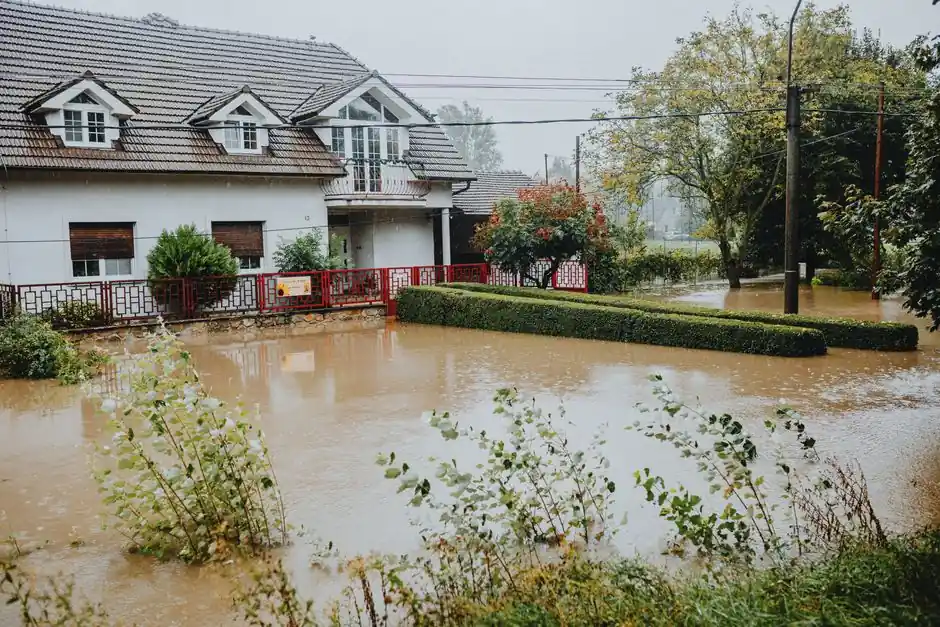
The fastest way to remove standing water from a basement is to cut power to the space, stop the water source, pump the bulk water out with a submersible pump, then extract the remaining inch with a wet/dry vac or truck-mounted unit and dry the structure with dehumidifiers and air movers within 24 to 48 hours. In Annapolis, most basements we pump sit below the water table near Back Creek and Spa Creek, so groundwater keeps seeping in until the tide drops and the sump pit is working again. This guide walks through the exact order of operations our crews use, from the first five minutes to the final moisture reading.
How long can standing water sit in a basement before it causes damage?
Standing water in an Annapolis basement starts growing mold in 24 to 48 hours, and the clock runs faster in summer when basement air sits at 75°F and 80% humidity. Carpet padding wicks water to the walls in under two hours. Drywall wicks it up the stud cavity at roughly one inch per hour. By hour 72, you are looking at a tear-out instead of a dry-out.
Water damage restoration in Annapolis, Maryland is the process of removing that water, drying the structure to a verified moisture baseline, and treating the affected materials so mold does not return. It is not just a pump and a fan. We measure moisture content in the drywall, the subfloor, and the base plates before we call a job finished.
Three things determine how much damage you get:
- Water category. Clean supply-line water is category 1. Sump or groundwater is category 2. Sewage backup is category 3 and requires removal of porous materials.
- Elapsed time. Under 24 hours is a dry-out. Over 72 hours is usually a rebuild.
- Material. Concrete block and tile survive. Carpet, pad, and particleboard do not.
Step 1: Kill the power and find the source
Before you touch a pump, shut off the breaker that feeds the basement outlets, the sump pump, and the furnace. Water and 120-volt circuits do not mix, and a flooded basement is the one place where a homeowner gets hurt doing the right thing.
Then find where the water is coming from. In Annapolis, the source is usually one of four things:
- A failed sump pump or a float switch stuck on a piece of debris.
- A backup from the municipal line during a heavy rain - the city's combined system can push water back through a floor drain.
- A burst or frozen supply line, most often on the exterior wall behind the kitchen or the hose bib.
- Groundwater pushing through the cove joint where the slab meets the foundation wall.
If the water is still rising, you have a live source. Shut the main valve at the meter and call for emergency water extraction Annapolis MD before you start bailing. If the water is stable and clear, you have time to work.
Step 2: Pump the bulk water out
Pumping is the fastest way to get 2 to 3 inches of standing water out of a 500-square-foot basement - a 1/3-horsepower submersible pump moves roughly 40 gallons per minute, so a 1,200-gallon basement drains in about 30 minutes. You need a pump, a discharge hose long enough to reach a drain or the yard, and an extension cord rated for outdoor use.
Two rules we follow on every job:
- Discharge at least 20 feet from the foundation. If you dump the water next to the wall, it comes right back through the same crack.
- Do not pump faster than the ground can drain. If you are pulling groundwater, pumping too fast can undercut the slab. Watch the water level and slow down if the flow stops.
If the water is deeper than 6 inches or covers more than one room, this is the point where most homeowners call us. We run standing water removal Annapolis MD with truck-mounted pumps that move 100 gallons per minute and a crew that can be on-site in under an hour.
Step 3: Extract what the pump leaves behind
A pump leaves about a half-inch of water on a concrete floor, and that half-inch is enough to keep the room at 90% relative humidity for a week. You need a wet/dry vacuum or a weighted extraction wand to pull it out of the low spots, the floor drain, and the carpet if the water reached it.
Work from the farthest corner toward the drain or the sump pit. Overlap each pass by half the width of the vacuum head. On carpet, a wet/dry vac gets about 60% of the water; a professional extraction unit gets closer to 95%. That gap is the difference between a carpet that dries in two days and one that smells like a wet dog by Thursday.
If the water came from a supply line or a fixture, we handle the repair and the cleanup together. A leaking water heater, a failed washing machine hose, or a cracked refrigerator line all leave the same puddle, and the fix is the same: stop the leak, then pull the water. Our appliance leak water cleanup Annapolis MD team does both in one visit.
Step 4: Dry the structure, not just the air
Drying a basement means getting the moisture content of the wood and drywall back under 16% - not just making the air feel dry. A box fan in the doorway does nothing for the base plate behind the drywall. You need air movement across every wet surface and a dehumidifier pulling moisture out of the air so the air can keep absorbing it.
The setup we run on a typical Annapolis basement:
- One air mover per 10 to 15 linear feet of wet wall, angled 15 degrees off the surface.
- A low-grain refrigerant or desiccant dehumidifier sized to the cubic footage - a 1,000-square-foot basement needs a unit rated for at least 70 pints per day.
- A moisture meter reading on the drywall, the studs, and the subfloor every 24 hours.
- Three to five days of runtime for a clean-water flood, seven or more for groundwater.
If the water sat long enough to soak the subfloor or the hardwood above it, the drying gets more involved. Our subfloor water damage drying Annapolis MD crews use floor mats and injection drying to pull moisture out of the wood without tearing up the whole floor.
Step 5: Prevent mold after standing water in basement Annapolis MD
Mold prevention starts the moment the water is out. You have a 24-to-48-hour window before spores that were already in the dust and on the joists start colonizing wet drywall. The steps are simple and they work.
- Remove anything porous that was submerged: cardboard, fabric, particleboard shelving, wet insulation.
- Wipe down hard surfaces with a mild detergent solution - not straight bleach, which leaves a film that feeds mold.
- Run the dehumidifier until the meter reads dry, then run it for one more day.
- Fix the water source. A dry basement with a broken sump pump floods again the next time it rains.
We see this every fall in Annapolis, especially in the older homes around Eastport and Murray Hill where the foundation drains were built for a smaller storm load than we get now. If your basement has flooded twice in two years, the fix is a drainage and sump upgrade, not another pump-and-mop.
Common mistakes we see in Annapolis basements
The mistakes that turn a two-day dry-out into a two-week rebuild are almost always the same ones.
- Waiting for the water to go down on its own. It will not. Groundwater in Annapolis sits high after a storm and stays high until the tide and the water table drop.
- Running a shop vac on a wet carpet and calling it done. The pad underneath is still soaked, and pad is where the smell starts.
- Opening windows to "air it out." In July and August, Annapolis outdoor air is 80% humidity. You are adding water, not removing it.
- Pumping into the yard next to the foundation. The water comes back through the same crack within an hour.
- Skipping the moisture meter. Dry to the touch is not dry. Wood that reads 20% will grow mold at 60°F.
One more: do not run a gas furnace, water heater, or any fuel-burning appliance in a flooded basement until a technician has checked it. Water in the burner compartment is a carbon monoxide risk.
When to call a professional
Call a professional when the water is deeper than 2 inches, when it covers more than one room, when it came from a sewage backup or a floor drain, or when it has been sitting for more than 24 hours. Those four conditions are the ones that turn into structural damage and mold claims.
At Annapolis Water Damage Pros, we handle the whole job: we stop the source, pump and extract the water, set drying equipment, and take daily moisture readings until the structure is back to a dry standard. We give you an upfront price before we start, and we work directly with your insurance adjuster on the documentation. If you are not sure whether your situation is a DIY job or a call, describe it to us and we will tell you straight.
Frequently Asked Questions
How do I remove standing water from my basement in Annapolis MD?
Shut off power to the basement, stop the water source, pump the bulk water out with a submersible pump discharging at least 20 feet from the foundation, then extract the remaining half-inch with a wet/dry vac. Dry the structure with air movers and a dehumidifier for 3 to 5 days and verify moisture content under 16% before you put anything back.
Is standing water in basement dangerous in Annapolis Maryland?
Yes. Beyond the slip and electrical hazards, standing water in an Annapolis basement can carry sewage bacteria from a backup, and it feeds mold growth within 24 to 48 hours. If the water came from a floor drain or a sewage line, treat it as contaminated and do not handle it without protective gear.
How long can standing water sit in basement in Annapolis?
Treat 24 hours as the practical limit and 48 hours as the point where mold is likely. After 72 hours, carpet, pad, and drywall usually have to be removed rather than dried. Groundwater floods in Annapolis can sit longer because the water table stays high, which is why we pump first and ask questions later.
Who removes standing water from basements in Annapolis?
Licensed water damage restoration companies remove standing water from basements in Annapolis. Annapolis Water Damage Pros handles emergency pumping, extraction, structural drying, and mold prevention for homes and businesses across the city, including Eastport, Murray Hill, and the neighborhoods around Back Creek.
Will my insurance cover basement water removal in Annapolis?
Most homeowner policies cover sudden and accidental discharge - a burst pipe, a failed water heater, a washing machine hose - but exclude long-term seepage and groundwater flooding unless you carry a separate flood policy. We document the source and the damage so your adjuster has what they need to make the call.
Get help with Water Damage Restoration in Annapolis
If the water is still rising or it has been sitting for more than a day, do not wait on it. We run Water Damage Restoration Annapolis MD crews seven days a week and can be at your door with pumps and drying equipment today.
Call Annapolis Water Damage Pros at (410) 559-1961 and we will tell you what the job takes before we start.